August 25, 2026
By Team Motozo
Who Really Benefits From India’s Vehicle Scrapping Policy—Car Owners, Government or Automakers?
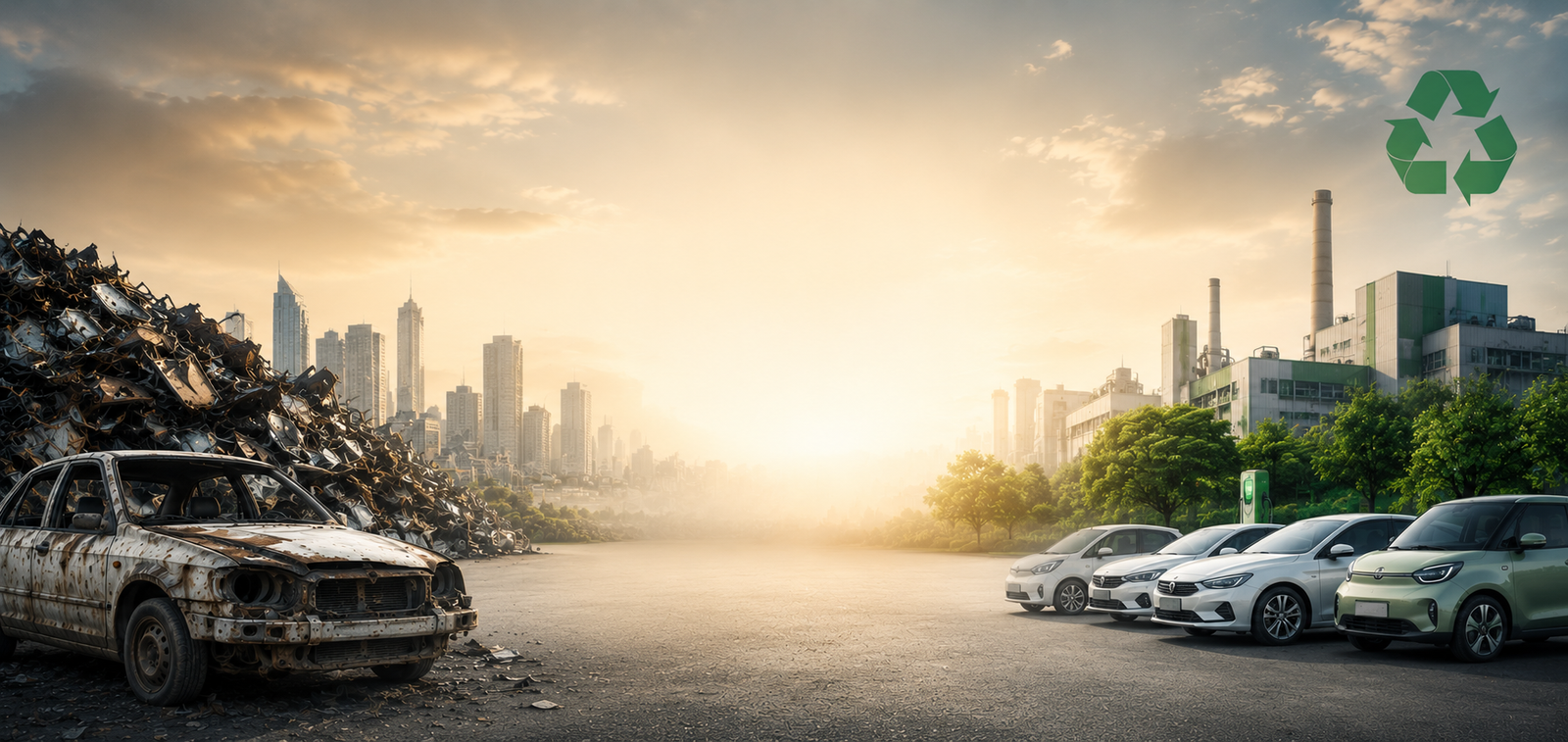
India’s Vehicle Scrapping Policy was introduced to create a more organised system for removing end-of-life and unfit vehicles from the roads.
But there is an interesting question:
Who benefits the most—car owners, the government, or automobile manufacturers?
The answer is: all three can benefit, but in different ways.
1. What Do Car Owners Get?
For vehicle owners, scrapping an old vehicle can provide a way to exit from an expensive-to-maintain car.
Under the scrapping framework, an owner can receive a Certificate of Deposit (CD) after submitting an eligible vehicle to a Registered Vehicle Scrapping Facility (RVSF). The CD can be used for certain incentives when purchasing another vehicle.
Depending on applicable state rules, benefits can include:
- Registration fee waiver
- Motor vehicle tax concessions
- Scrap value for the old vehicle
- Potential manufacturer discounts
MoRTH’s 2024–25 annual report says 23 States/UTs had announced motor-vehicle-tax concessions, while registration-fee waiver is available nationally for vehicles purchased against a Certificate of Deposit.
So, for owners, the biggest benefit is turning an unwanted old vehicle into financial and practical value.
2. What Does the Government Gain?
The government has several objectives behind the policy.
A formal vehicle scrapping ecosystem can help:
- Reduce pollution from older, high-emission vehicles
- Improve road safety
- Encourage responsible recycling
- Reduce dependence on imported raw materials
- Create employment
- Support investment in the recycling sector
MoRTH describes the policy as a way to encourage safer vehicles, boost automobile manufacturing and the scrapping industry, improve access to recycled raw materials and reduce pollution.
For the government, therefore, the benefit is much broader than simply removing old cars.
3. What Do Automakers Get?
This is where the debate becomes interesting.
If an old vehicle is scrapped and the owner decides to purchase a newer vehicle, new-vehicle demand can increase.
Automakers can benefit from this replacement cycle.
The government report says several automobile manufacturers have agreed to offer discounts on new vehicles purchased against a Certificate of Deposit. For passenger vehicles, participating OEMs covering about 98% of the market had agreed to discounts of up to the lower of 1.5% or ₹20,000, with Mercedes-Benz announcing a ₹25,000 discount.
So automakers may provide an incentive—but they can also gain a potential customer for a new vehicle.
4. The Recycling Industry Also Benefits
There is another important winner:
The recycling industry.
An old car contains steel, aluminium and other recoverable materials.
A formal scrapping system can move these vehicles from informal disposal toward organised dismantling and recycling.
The government’s RVSF system includes digital processing, payment of scrap value to the owner and issuance of documents such as the Certificate of Deposit and Certificate of Vehicle Scrapping.
This can make the entire process more organised and traceable.
So Who Benefits the Most?
It depends on how you look at it.
| Stakeholder | Main Benefit |
|---|---|
| Car Owner | Scrap value + possible incentives + lower maintenance burden |
| Government | Pollution reduction + road safety + formal recycling |
| Automakers | Potential demand for newer vehicles |
| Recycling Industry | More organised supply of end-of-life vehicles |
| Environment | Material recovery and responsible vehicle disposal |
The policy is therefore not designed to benefit just one group.
But Is It Really a Win for Car Owners?
This is the important part.
A car owner should not assume that scrapping an old vehicle automatically means getting a huge financial benefit.
The actual car scrap price depends on factors such as the vehicle, its weight, condition and prevailing market rates.
And replacing an old car with a new one is a much bigger financial decision.
That’s why owners should compare:
Scrap Value + Available Incentives + Maintenance Savings
against
Cost of Buying a New Vehicle.
Why This Matters in Delhi NCR
For people searching for car scrapping in Delhi, car scrap dealer Delhi, or authorised car scrap dealer, understanding the complete process is important.
Delhi NCR has been at the centre of India’s discussion around older vehicles and vehicle emissions.
For owners considering scrapping, the right question isn’t simply:
“Kitne paise milenge?”
It should also be:
“Is this the right financial and practical decision for my vehicle?”
Where Motozo Fits In
Motozo helps eligible vehicle owners in Delhi NCR with the car scrapping process.
The focus is on making the process easier through services such as:
- 🚗 Doorstep vehicle pickup
- 💰 Scrap valuation
- 📄 Documentation assistance
- 💳 Payment
- ♻️ Vehicle scrapping
- 🏛️ Deregistration-related support
For someone searching for a car scrap dealer, the important thing is to understand the process and choose a service that provides clear information and proper documentation.
Final Verdict
So, who really benefits from India’s Vehicle Scrapping Policy?
The honest answer is:
Everyone can benefit—but only when the ecosystem works properly.
Car owners get an organised way to dispose of old vehicles.
The government gets environmental, safety and economic benefits.
Automakers can gain from vehicle replacement demand.
And recyclers get a more formal supply of end-of-life vehicles.
But the biggest long-term winner should be the overall ecosystem.
Because the success of India’s vehicle scrapping policy shouldn’t be measured only by how many old vehicles are scrapped.
It should also be measured by how much value is created for car owners, the environment and the Indian economy.