August 18, 2026
By Team Motozo
10-Year-Old Diesel, 15-Year-Old Petrol: Is Age Really the Right Way to Judge a Vehicle?
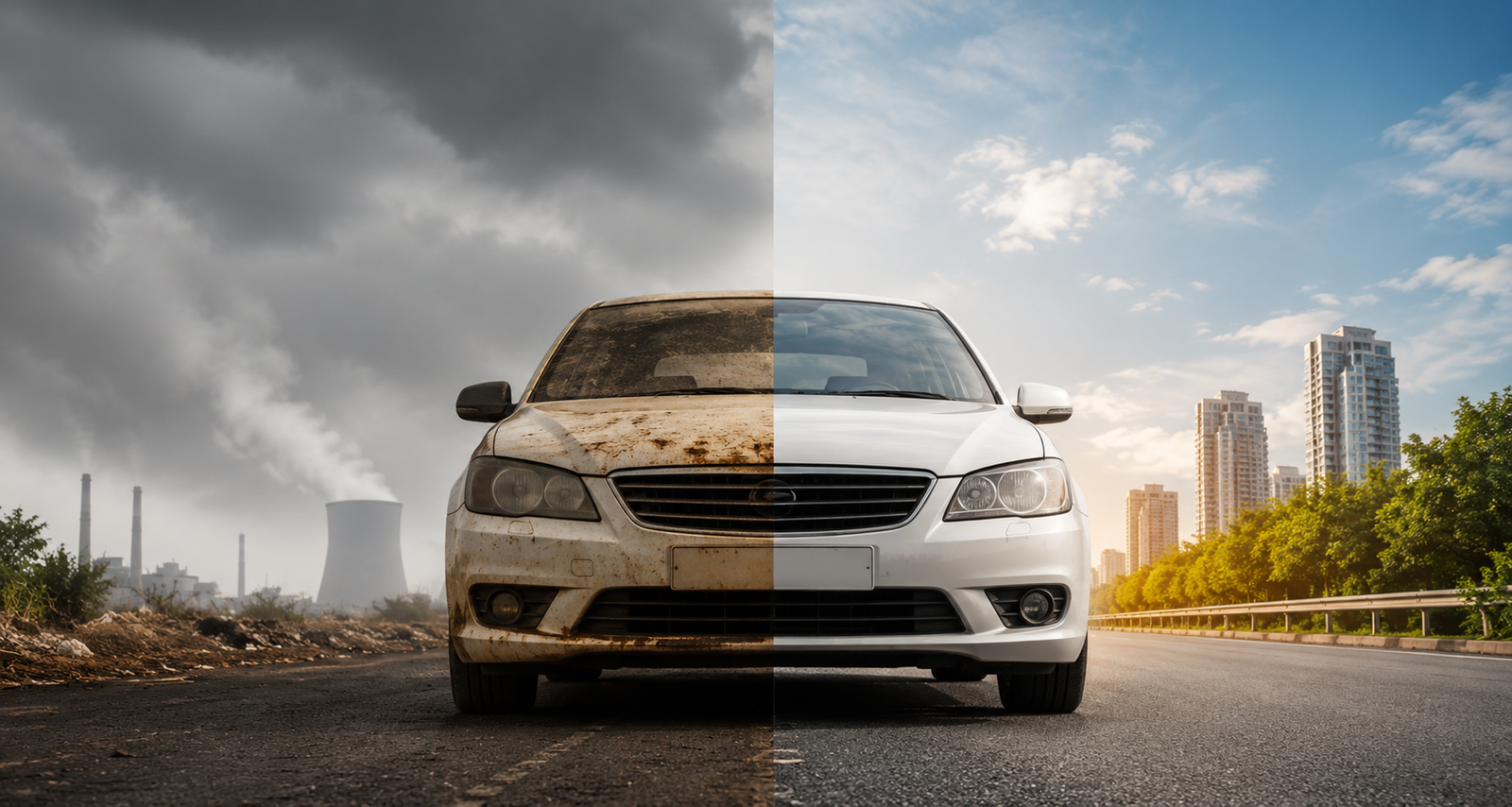
10 years for diesel. 15 years for petrol.
These numbers are familiar to many vehicle owners, especially in Delhi NCR. But they raise an important question:
Should a vehicle’s age alone decide whether it should stay on the road or be scrapped?
The answer is more complicated than simply looking at the registration year.
Why Does Vehicle Age Matter?
As vehicles become older, their condition can change.
Parts wear out, maintenance requirements increase, and emissions can become a concern if the vehicle is not properly maintained.
This is one reason vehicle age has become an important part of India’s discussion around vehicle scrapping.
However, two vehicles of the same age can be completely different.
One may be well maintained, while another may have serious mechanical or emission-related problems.
10-Year-Old Diesel vs 15-Year-Old Petrol
In Delhi, age-based restrictions have made these numbers particularly important.
A commonly referenced rule is:
- Diesel vehicles: 10-year limit
- Petrol vehicles: 15-year limit
But these limits should not be understood as saying that every old vehicle everywhere in India must automatically be scrapped. Applicable rules can vary by location and vehicle circumstances.
For Delhi vehicle owners, however, these age limits have a major practical impact.
Is Age Really Enough?
This is where the debate begins.
Imagine two cars:
Car A: 12 years old, regularly serviced and maintained.
Car B: 7 years old, poorly maintained and producing excessive emissions.
Which vehicle is actually the bigger problem?
Age alone cannot answer that question.
Other factors can include:
- Vehicle fitness
- Emission levels
- Maintenance history
- Mileage
- Safety condition
- Mechanical condition
- Usage pattern
This is why vehicle fitness testing is an important part of a modern scrapping ecosystem.
What Is the Role of Vehicle Scrapping?
The goal of car scrapping is not simply to remove old vehicles.
A proper scrapping system should help identify vehicles that have reached the end of their useful life and ensure that they are processed responsibly.
The process can also help recover materials such as metal and other recyclable components.
This creates a more organised cycle:
Old Vehicle → Scrapping → Recycling → Reuse of Materials
What About the Owner?
For a car owner, the decision is also financial.
An older car may require:
- More frequent repairs
- Expensive replacement parts
- Higher maintenance spending
- More downtime
- Additional transportation costs
At some point, keeping the vehicle may no longer make financial sense.
That’s when owners can explore their car scrap value and compare it with the cost of continuing to maintain the vehicle.
What Should Delhi Car Owners Do?
If you own an old petrol or diesel vehicle in Delhi NCR, don’t make a decision based only on what someone tells you.
First, check:
- Your vehicle’s registration date.
- Fuel type.
- Applicable local rules.
- Current vehicle condition.
- Fitness and emission requirements.
- Available scrapping options.
- Potential scrap value.
If the vehicle has reached the applicable end-of-life stage, choosing an authorised car scrap dealer can help make the process more organised.
Why Doorstep Pickup Matters
Many old vehicles are no longer in running condition.
Moving such a car to a scrapping facility can be difficult.
A professional car scrap dealer may provide doorstep pickup for eligible vehicles, making the process easier for owners.
Motozo and Car Scrapping
Motozo helps eligible vehicle owners in Delhi and NCR with the car scrapping process.
Motozo can assist with:
- Doorstep vehicle pickup
- Scrap valuation
- Documentation assistance
- Payment
- Vehicle scrapping
- Deregistration-related assistance
If you’re searching for car scrap dealer Delhi, authorised car scrap dealer, car scrapping Delhi, or scrap car dealers near me, understanding your vehicle’s options is the first step.
Final Thought
10 years for diesel. 15 years for petrol.
These numbers are important, but they are only one part of the bigger conversation.
The real question should be:
Is the vehicle still fit, safe and environmentally responsible to remain on the road?
As India’s vehicle scrapping ecosystem develops, the focus should be on creating a system that is transparent, practical and fair for both vehicle owners and the environment.